

Hey there! As a supplier of plywood saw cutting machines, I've seen firsthand the differences between stationary and mobile plywood saw cutting machines. In this blog, I'll break down these differences to help you decide which type of machine is right for your woodworking needs.
1. Mobility and Portability
Let's start with the most obvious difference: mobility. A mobile plywood saw cutting machine, as the name suggests, is designed to be easily moved around. It's great if you need to take your saw to different job sites or if you have a workshop layout that changes frequently. You can wheel it from one corner of the shop to another or even load it into a truck and transport it to a client's location.
On the other hand, a stationary plywood saw cutting machine is meant to stay in one place. It's usually heavier and more robustly built, which makes it less suitable for moving around. But this lack of mobility isn't always a bad thing. Since it's fixed in one spot, it can provide a more stable cutting platform. You don't have to worry about the machine shifting during a cut, which can lead to more accurate and consistent results.
For example, if you're a contractor who works on multiple construction sites, a mobile saw like our Cutting Panel Saw would be a great choice. It can be easily transported to each site, allowing you to cut plywood on the spot. But if you have a dedicated woodworking shop and do a lot of precision cutting, a stationary saw might be more up your alley.
2. Power and Performance
Power is another key difference between stationary and mobile plywood saw cutting machines. Stationary saws generally have more power. They're often equipped with larger motors that can handle thicker and harder plywood materials. This extra power allows for faster and more efficient cutting, especially when dealing with large volumes of work.
Mobile saws, while still powerful, usually have smaller motors to keep the weight down and make them more portable. This means they might not be able to cut through the thickest or toughest plywood as quickly as a stationary saw. However, for most common plywood cutting tasks, a mobile saw's power is more than sufficient.
Take our 5.5KW Table saw slide table. It's a stationary saw with a powerful 5.5KW motor. This motor can easily slice through thick plywood sheets, making it ideal for large - scale woodworking projects. In contrast, our more mobile saws are designed to balance power and portability, providing enough oomph for everyday cutting jobs.
3. Cutting Capacity
The cutting capacity of a saw is closely related to its power and design. Stationary plywood saw cutting machines typically have a larger cutting capacity. They can handle wider and longer plywood sheets. This is because they have larger tables and more space for the wood to move through the saw.
Mobile saws, due to their compact design, have a more limited cutting capacity. They're usually better suited for cutting smaller pieces of plywood. However, many mobile saws are still versatile enough to handle a variety of sizes, and some even come with adjustable features to increase their cutting range.
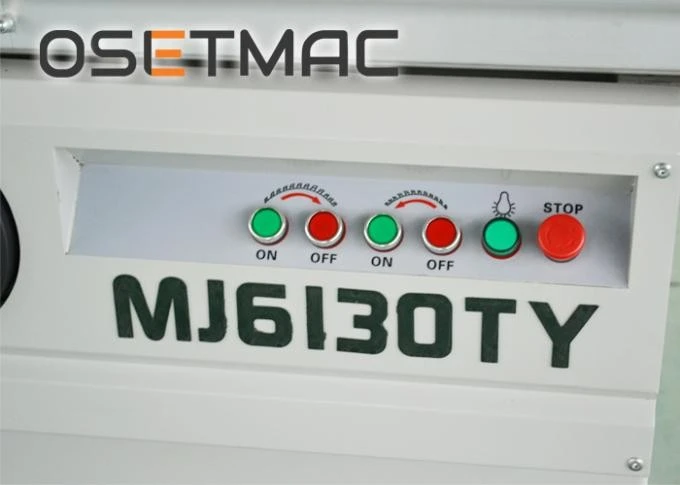
If you're working on projects that require cutting large panels of plywood, a stationary saw like our MJ6130TY Wood Cutting Machine is the way to go. It can accommodate large sheets with ease, ensuring smooth and accurate cuts. But if you mainly work on smaller projects or need to make quick cuts on the go, a mobile saw will serve you well.
4. Price and Cost - Effectiveness
Price is always an important factor when choosing a plywood saw cutting machine. Generally, stationary saws are more expensive than mobile ones. This is because they're larger, more powerful, and built with more heavy - duty components. However, they also offer long - term cost - effectiveness. Since they're more durable and have a higher cutting capacity, they can handle a larger volume of work over time, which can save you money in the long run.
Mobile saws are more budget - friendly. They're a great option if you're just starting out in woodworking or if you don't have a large budget to invest in equipment. They also require less space, which can save on storage costs.
5. Ease of Use and Setup
When it comes to ease of use and setup, mobile plywood saw cutting machines have an edge. They're usually easier to set up and can be ready to use in a matter of minutes. You don't need to spend a lot of time installing or calibrating them. They also tend to have simpler controls, which makes them more user - friendly, especially for beginners.
Stationary saws, on the other hand, require more time and effort to set up. They often need to be bolted to the floor or a workbench to ensure stability. The calibration process can also be more complex. However, once they're set up correctly, they offer a high level of precision and consistency.
6. Maintenance and Durability
Maintenance and durability are crucial considerations for any woodworking equipment. Stationary plywood saw cutting machines are generally more durable. They're built with heavy - duty materials and components that can withstand the rigors of continuous use. They also tend to have better cooling systems, which helps prevent overheating and extends the life of the motor.
Mobile saws, while still built to last, may require more frequent maintenance. Their smaller size and portability mean that they're more likely to be exposed to dust, dirt, and other contaminants. Regular cleaning and lubrication are essential to keep a mobile saw in good working condition.

Conclusion
So, there you have it - the main differences between stationary and mobile plywood saw cutting machines. Each type has its own advantages and disadvantages, and the right choice depends on your specific woodworking needs, budget, and working environment.
If you need a saw that's easy to move around, works well for small - to - medium - sized projects, and fits a tight budget, a mobile saw is the way to go. But if you're looking for a powerful, high - capacity saw that can handle large - scale projects with precision, a stationary saw is the better option.
If you're interested in learning more about our plywood saw cutting machines or have any questions about which type is right for you, don't hesitate to reach out. We're here to help you make the best choice for your woodworking business. Let's start a conversation and see how we can meet your cutting needs!
References
- General knowledge and experience in the plywood saw cutting machine industry.


