

CNC Router
What Is CNC Router?
A CNC router is a subtractive manufacturing process that uses a rotary tool to remove material from wood, expanded polyurethane foam, plastic, and soft metals. A CNC router typically has a gantry-style construction where the spindle travels left and right along the x-axis and back and forth on the y-axis. A CNC router is different from a standard CNC mill because it is not designed for high-speed cutting of complex geometries in hard metals. Gantry-style CNC routers are generally less stiff than standard CNC mills, and when harder metals are being cut. For that reason, they are limited to cutting softer materials like wood, soft metals, and, in some cases, steel. It must also be noted that routers have limited travel along the z-axis, meaning they cannot create deep holes and slots. For more information, see our guide on CNC machining.
Advantages of CNC Router
Multi-purpose
The router's ability to cut and engrave without the use of a different tool is a significant advantage. You can precisely and repeatedly cut materials thanks to the repeatability of material shaping. Error and waste frequency are therefore decreased.
It is User-friendly
The toolpath instructions for CNC routers are typically provided by a piece of intermediary software like Vectric Cut2Dpro. However, programmers are still free to use their preferred drawing program. If training has been completed, programming and running the equipment is simple and straightforward.
Safe to use
Routers emit fewer fumes than many alternative shaping techniques (such as laser engraving). Despite that, they can still generate tons of chippings and dust when cutting. Also, CNC routers often have a dust extraction system fitted to reduce the dust leaving the bed to the surrounding environment. The dust extraction system consists of a filter and an extractor fan.
Precision
With their computer-operated nature, CNC routers deliver better precision and consistency. When you input your design and measurements, the CNC routers can create as many products as you wish. And everything it produces will look the same.
Unlike handheld machines that are prone to errors and inexact cuts, CNC routers are excellently precise and reliable. These machines also help you increase savings since their precision allows for efficiently utilising raw materials on each cut. As a result, you also increase your profit margin.
Flexibility
CNC routers offer unparalleled flexibility. These are capable of drilling and milling various types of materials, including metals. You can use them for creating signs, mouldings, furniture, instruments, and other items we use regularly. The flexibility of CNC routers allow businesses to perform multiple tasks and bring in more businesses.
-
 S-1325 carving and milling machineS-1325 carving and milling machine,is a cnc machine having 1300mm*2500 working Wood Carving CNC Router. Ideal for woodworking, woodwork engraving it stands out as an impeccable choice, cnc routerAdd to Inquiry
 -
 ATC CNC Router* 4+2 Position cylinder. * 4KW Dust Collector. * SYNTEC System + SYNTEC Servo + SINEE Inverter. * 7.5KW Water-cooled Vacuum PumpAdd to Inquiry
 -
Wood Carving MachineS-1325 carving and milling machine,is a cnc machine having 1300mm*2500 working Wood Carving CNC Router. Ideal for woodworking, woodwork engraving it stands out as an impeccable choice, cnc routerAdd to Inquiry
-
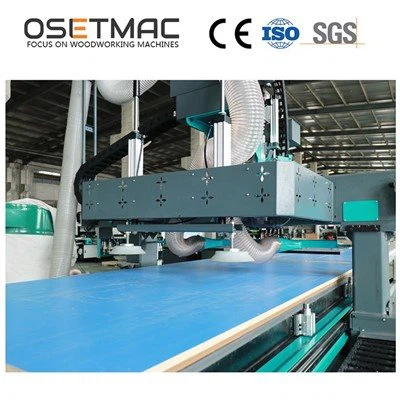 Cnc Router Machines* 4+2 Position cylinder. * 4KW Dust Collector. * SYNTEC System + SYNTEC Servo + SINEE Inverter. * 7.5KW Water-cooled Vacuum PumpAdd to Inquiry
 -
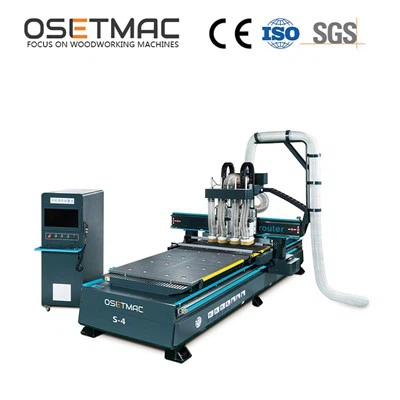 Automated engraving machine tool* Multi Spindle PrecisionCarving machine Cnc Body: 8mm Thick Square Stee*Multi Spindle PrecisionCarving machine Automatic Pushing SystemAdd to Inquiry
 -
 Precision CNC engraving and milling machinePrecision CNC engraving and milling machine are the preferred choice for a large number of production enterprises. 12 Tools Atc Woodworking CNC RouterThis CNC machine tool has an independent toolAdd to Inquiry



Wechat: +86-18661895387
Whatsapp: +86-18661895387
- Email: info@osetmac.com
- Add: No.217 East Zhuhai Road, Huangdao District, Qingdao, Shandong Province, China
Why Choose Us
Our factory
Osetmac has been focusing on woodworking machinery for more than 8 years. Osetmac has a wholly-owned manufacturing plant - qingdao sanysan machinery company.
Strong production market
Our products have been sold to more than 30 countries and regions including the middle east, southeast ASIA, Europe and South America.
Professional certification
The manufacturing plant has obtained ISO 9001 certification, and some major products have passed CE certification.
Good service embodiment
According to customer needs, recommend the most suitable products and provide a complete set of solutions. Confirm customer order details with the factory and follow up on production progress. Pay attention to changes in customer needs at any time and provide solutions in a timely manner. Collect customer feedback and solve problems encountered by customers during use in a timely manner.
Application of CNC Router
Furniture making
Using CNC router machine is the best choice to produce large quantities of furniture. And if you want to turn your imagination into reality and make some unique furniture. A CNC router is perfect for the job. CNC router can produce a wide range of personal tailor furniture including beds, dining sets, chairs, staircase, window, modern furniture, office furniture, etc.
Cabinet making
Give your kitchen a make-over with a set of crafted cabinets using your CNC router. This technology lends itself to the creation of shelves, side panels, dados, drawer fronts, and custom doors.
Sign making
A CNC router is perfect for advertising sign carving because it is versatile enough for V-bit carving, 3D carving, fluting, contour profiling, and engraving.
Crafts and art
The range of arts and crafts you can produce with your router is almost limitless, such as jewelry, mirror and picture frames, coins, Christmas decorations, and plaques.
Mould Making and prototyping
Nowadays 5-axis foam mill CNC routers, big gantry router for foam milling,6 axis robotic arm,7 axis industrial robots, are ideal for milling epoxy, foam and clay 3D design models. CNC foam cutting machine can be used to cut molds from EPS foam, polyurethane foam, EVA foam, plastic, etc. They are very helpful for building CNC foam molds and robot fabrication. More and more digital studio choose them.
Design
They are widely used architectural millwork. Because of the exquisite detail a CNC router can produce, you can make delicate designs for all kinds of unique architectural touches.
Frame
The frame is the CNC router's backbone, providing structural support for the entire machine. It must be robust and stable to withstand the forces exerted during the routing process. The integrity of the frame directly influences the precision of cuts, as any flexing or vibration can lead to inaccuracies.
Motors
Motors are the muscles of a CNC router, driving the movement along the X, Y, and Z axes. There are generally two types of motors used: stepper and servo. Stepper motors move in predetermined steps, offering precise control over position without feedback. Servo motors, equipped with feedback systems, adjust for any discrepancies between the expected and actual positions, offering even greater accuracy and efficiency.
CNC controller
The CNC controller is the brain of the operation. This computerized control panel interprets the G-code from the CAM software and translates it into electrical signals that dictate the motors' movements. It's the interface where you input commands and monitor the routing process, ensuring the router executes the design with precision.
Gantry
The gantry is a bridge-like structure that spans the cutting table. It houses the spindle or router and moves along the X-axis (left to right), with the ability to support movement in the Y-axis (front to back) for certain designs. Its stability and smooth movement are crucial for achieving clean cuts and intricate details.
Table/bed
The table, or bed, is where you secure the material to be cut. It's designed to offer a flat, stable surface that can hold various materials in place, either through clamps, vacuum hold-downs, or other mechanisms. The table's design affects the types of materials you can work with and the precision of the cuts.
Spindle/router
This component is the cutting tool of the CNC router, responsible for carving, engraving, and shaping the material. Spindles and routers vary in power and speed, allowing for a wide range of cutting capabilities, from delicate engraving to deep, aggressive cuts. The choice between a spindle and a handheld router often depends on the specific requirements of the project, including the material's hardness and the intricacy of the design.
Ways
‘Ways' refer to the linear bearings or guides that facilitate the smooth and accurate movement of the machine's moving parts along the axes. High-quality ways reduce friction and wear, ensuring long-term precision and reliability.
Axis drive
The axis drive mechanism, including systems like rack and pinion or ball screws, converts the rotational movement of the motors into linear motion. This movement is what drives the gantry and spindle/router across the material. The type of drive system impacts the machine's speed, accuracy, and ability to handle different materials.

Routing is a common production method used in woodwork, signage, moldings, thermoforming, and more. It's most effective when a precise cut is required on a regular basis. CNC routers, depending on their components, are compatible with various hard materials including wood, metal, stone, plastics, foam, acrylics, and glass. Some machines are equipped with dust collection systems, which soak in material chips and other waste during the process.
Computer controlled routers help to reduce production time and the frequency of manufacturing errors by creating near-identical objects each and every time, provided all external factors are controlled. CNC routers require technical assistance from time to time, with working tools and mechanisms wearing down over time. However, the production capabilities and speeds still make using these machines extremely cost-efficient for businesses and hobbyists.
Older versions of CNC routers used to be large and take up a lot of room but now modern machines come in various sizes, and there are even desktop versions, which fit on a table and still delivery superb results. Software used in routers has also improved, so even hobbyists are now able to operate simple machines with the help of CAD/CAM programs. Several programs are designed for special purposes and can help to create simple models, as well as generating codes for designs. This makes CNC routers helpful for tinkerers, furniture manufacturers and even designers, without the need for professional carving and woodworking skills.
How to Maintain CNC Router
Cleaning
Regularly clean your machine to prevent dust and debris accumulation. Focus on critical parts like the linear guide powder and ball screw. Use appropriate cleaning tools and solvents to gently clean sensitive areas, ensuring that you don't cause inadvertent damage.
Lubrication
Consistent lubrication is key. Moving parts such as the ball screw and linear guide require regular oiling. Using the recommended lubrication oil not only enhances your machine's working precision but also minimizes friction-induced wear and tear.
Computer checks and software updates
The computer that controls your CNC machine is its brain. Regular checks can help catch software glitches, outdated firmware, or hardware malfunctions early on. Consider scheduling a professional service if needed.
Cooling system checks
The spindle motor's cooling water plays a critical role in your CNC router's performance. It needs to be at the right level and temperature to prevent overheating. Regularly verify these parameters, and use a coolant or distilled water as recommended by the manufacturer.
Regular inspections
Be proactive about inspecting your machine for signs of wear and tear. Loose bolts, frayed wires, or any unusual noise or movement should be addressed immediately. Think of it as your machine talking to you about its health.
Environmental checks
Continually monitor the environment around your CNC router. Clean and dry conditions are best. Also, ensure that there's enough space around the machine for easy access during the CNC router maintenance and enough airflow to prevent overheating.
Training the operators
Knowledge is power. Ensure all machine operators are well-trained and aware of best operational practices. Regular workshops or refresher courses can help prevent mishandling that might lead to damage.
Follow manufacturer's guidelines
Stick to your manufacturer's maintenance schedule like glue. This ensures you cover all bases and keep your machine in prime condition. Consider these guidelines as a roadmap to a long-lasting machine.
How to Choose a CNC Router
Electrical requirements
Determine the electrical capabilities of your shop since some routers are designed to work only with specific voltages. Make sure you have three-phase power, or you'll need to install it if you buy a more sophisticated model. If you want a desktop model, it most likely will come with single-phase power and work in your home shop.
Software requirements
Consider the software requirements of the CNC router. You might want to choose a software package specific to your business, such as software for cabinet making or engraving.
Budget
Your budget is a critical factor when searching for a CNC router. Depending on whether you want the machine tool for a small business, a large shop, or to pursue a hobby, prices will vary substantially. Also, include the cost of accessories, such as collets and router bits, in your estimation.
Brand
There are dozens of companies to choose from when buying a CNC router machine. While the considerations above are most important, many amateur hobbyists or home machinists start their journey on Amazon.
Accessories
If you're buying a new router, check to see what accessories it comes with and which ones you'll need to buy. Accessories like automatic tools changers, end mills, dust collection units, vacuum systems, computers, and software upgrades may not be included with your CNC router machine and can add additional costs new buyers should be aware of.
Your uses
Before you spend tens of thousands on a machine, consider your likeliest uses. If you're a machinist, the smaller less heavy-duty CNC routers likely won't hold up to the everyday demands of a shop.
Design creation with computer-aided design (CAD) software
In this initial stage, detailed drawings of the final product are meticulously crafted, establishing dimensions, shapes, and features that the CNC router will carve out. This digital blueprint is crucial as it precisely dictates what will be produced.
Toolpath generation with cam software
Cam software translates cad designs into machine-readable instructions, producing toolpaths that guide the CNC router bit's movements during material cutting. These instructions detail the sequence of operations, tool selections, cutting speeds, and other critical parameters for the production process.
Code generation and transfer
Once toolpaths are established, cam software generates g-code, a language CNC routers understand, precisely defining all movements and operations. This g-code is transferred to the router's controller, overseeing the execution of these instructions for accurate machining.
Setting up the material and tools
Before operation, the operator prepares the CNC router by securely fastening and aligning the workpiece on the worktable. Additionally, they choose and install suitable router bits and tools, taking into account factors such as material type, geometry, and desired finish.
Running the machine and monitoring the production process
Once set up, the operator initiates the CNC router, swiftly following designated toolpaths. Continuous monitoring allows for real-time adjustments, ensuring adherence to specifications, and upon completion, the produced piece is inspected for accuracy and quality, concluding the CNC routing process.

Safety Tips When Operating a CNC Router
Before plugging the machine into the power source, check that the power button is off.
Do not, under any circumstances, operate a CNC router while under the influence of drugs, alcohol, sleeping pills, or other medications that cause you to become drowsy.
Do not operate a CNC router in a wet environment. This eliminates any possibility of electric shock and slip accidents. Keep the work surface free from grease.
Keep the area around the CNC router clean and tidy.
Avoid fighting in the workplace. Always focus on the work being done.
Never leave the room while the machine is processing. Before leaving, make sure the machine is turned off. Do not leave the machine unattended.
Do not place any part of your body within 6 inches of the cutting tool while it is moving.
Always make sure that the correct drill bit for the job is inserted.
Keep all wires away from heating devices, sharp edges, or moving parts. Position all wires and cables where they will not create a tripping hazard. Use floor wire covers or cable ramps if they need to pass through the work area.
Check that your horsepower is appropriate for the material you are cutting.
Make sure all workpieces are securely clamped.
Do not force material into the router.
Do not try to increase cutting depth by inserting less shank into the chuck.
If a drill bit malfunctions or breaks, shut the machine off immediately before troubleshooting.
Do not use non-routing tools, even if their shanks may fit in the chuck.
Our Factory
OSETMAC focuses on woodworking machines for over 8 years. OSETMAC has one wholly-owned manufacturing factories--Qingdao Three One Three Machinery Company. Our factories have been well-recognized as a professional woodworking machine producers. The main products of OSETMAC is sliding table saw, brush sanding machine, edge banding machine, wood drilling machine and CNC routers. What's more, our products have been sold to more than 30 countries and regions in Middle East, Southeast Asia, Europe and South America. OSETMAC is able to do our own R&D, deliver production task on time and provide customer service quickly. The manufacturing factories have already been granted ISO9001, and some of the main products have passed CE certificate.

Our Certificate


FAQ
As one of the most professional cnc router manufacturers in China, we're featured by quality products and low price. Please rest assured to wholesale discount cnc router from our factory. Contact us for customized service.
CNC router for fiberglass cutting, CNC router for mirror frame, CNC router for insulation materials