

Hey there! As a supplier of automatic edge banding machines, I often get asked about how to set the parameters on these nifty devices. It can seem a bit daunting at first, but once you get the hang of it, it's a breeze. So, let's dive right in and break down the process step by step.
Understanding the Basics
Before we start tweaking those parameters, it's important to have a basic understanding of what an automatic edge banding machine does. Simply put, it's a machine that applies a thin strip of edge banding material to the edges of a workpiece, like a piece of furniture or a cabinet. This not only gives the workpiece a finished look but also protects the edges from damage.
There are different types of automatic edge banding machines out there, such as the Pvc Edge Banding Machine, Mini Automatic Edge Bander, and Woodworking Edgebanders. Each type might have some unique features, but the general process of setting parameters is quite similar.
Pre - setting Checks
First things first, you need to do a few pre - setting checks. Make sure the machine is clean and free of any debris. Check the power supply to ensure it's stable and within the recommended voltage range. Also, inspect the edge banding material and the workpiece for any defects. The edge banding material should be of good quality and the right thickness for your project.
Setting the Feed Speed
The feed speed is one of the most important parameters. It determines how fast the workpiece moves through the machine. If the feed speed is too fast, the edge banding might not be applied properly, and if it's too slow, it can waste time.
To set the feed speed, start by referring to the machine's manual. Usually, there's a control panel where you can adjust the speed. A good rule of thumb is to start with a medium speed and then make adjustments based on the results. For example, if you're working with a softwood workpiece and a thin edge banding material, you might be able to increase the speed a bit. But if it's a hardwood or a thicker edge banding, you may need to slow it down.
Adjusting the Glue Application
Proper glue application is crucial for a strong bond between the edge banding and the workpiece. Most automatic edge banding machines have a glue pot where you can control the temperature and the amount of glue applied.
The temperature of the glue should be set according to the type of glue you're using. Some glues work best at higher temperatures, while others are more suitable for lower ones. Check the glue manufacturer's instructions for the recommended temperature range.
To adjust the amount of glue, look for the glue flow control on the machine. You want to apply enough glue to create a good bond but not so much that it oozes out and creates a mess. You can test the glue application on a scrap piece of workpiece first and make adjustments as needed.
Setting the Pressure
The pressure applied by the machine is what presses the edge banding onto the workpiece. There are usually pressure rollers or other pressure - applying components.
On the control panel, you can adjust the pressure settings. The pressure should be uniform across the width of the edge banding. If the pressure is too low, the edge banding might not stick properly, and if it's too high, it could damage the edge banding or the workpiece.
Again, start with a medium pressure setting and test it on a scrap piece. You may need to adjust the pressure depending on the hardness of the workpiece and the thickness of the edge banding. For example, a thicker edge banding might require more pressure to ensure a good bond.
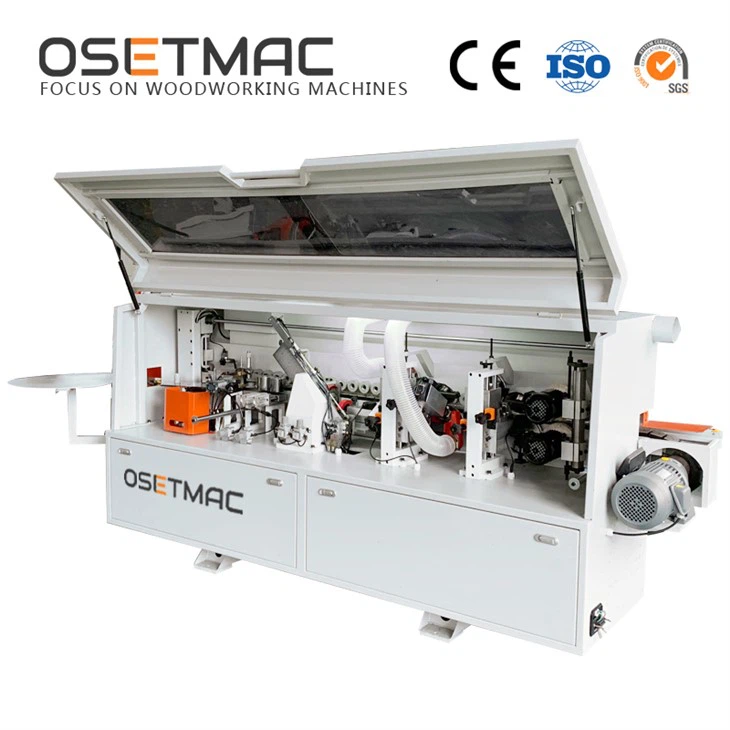

Trimming and Rounding
After the edge banding is applied, most machines have trimming and rounding functions to give the edges a clean and finished look.
For trimming, you need to set the height and depth of the trimming blades. The height should be adjusted so that the excess edge banding is trimmed off evenly. The depth should be set according to the thickness of the edge banding. You can use the machine's measurement tools to make these adjustments accurately.
The rounding function is used to give the edges a smooth, rounded appearance. Similar to trimming, you can adjust the settings on the control panel to set the radius of the rounding. This will depend on the design requirements of your project.
Fine - Tuning
Once you've made all the initial settings, it's time to do some fine - tuning. Run a few test pieces through the machine and carefully examine the results.
Look for any signs of uneven bonding, excess glue, or improper trimming. If you notice any issues, go back and make the necessary adjustments. For example, if the edge banding is peeling off in some areas, you might need to increase the glue application or the pressure.
Maintenance and Safety
It's important to keep in mind that regular maintenance of the automatic edge banding machine is essential for optimal performance. Clean the machine after each use, especially the glue pot and the rollers. Check the belts, chains, and other moving parts for wear and tear and replace them as needed.
Also, always follow safety procedures when operating the machine. Wear appropriate safety gear, such as safety glasses and gloves. Make sure you're familiar with the emergency stop button in case of any unexpected situations.
Conclusion
Setting the parameters on an automatic edge banding machine might seem like a complex task at first, but with a bit of practice and understanding, you'll be able to get great results. Remember to refer to the machine's manual, start with basic settings, and make adjustments based on your specific project requirements.
If you're in the market for an automatic edge banding machine or have any questions about setting the parameters, feel free to reach out. We're here to help you make the most of your woodworking projects. Whether you're a small - scale woodworker or a large - scale furniture manufacturer, our machines are designed to meet your needs.
References
- Manufacturer's manuals of automatic edge banding machines
- Glue manufacturer's instructions
- Woodworking industry best practices guides


