

A heavy duty planer thicknesser is a powerful and versatile tool in the woodworking industry, capable of precisely smoothing and dimensioning wooden boards. Many woodworkers often wonder if this machine can also be used for making moldings. In this blog, as a heavy duty planer thicknesser supplier, I'll explore the capabilities of heavy duty planer thicknessers in molding production, discuss their limitations, and compare them with dedicated molding machines.
Understanding the Heavy Duty Planer Thicknesser
Before delving into its molding - making potential, let's understand what a heavy duty planer thicknesser is. A heavy duty planer thicknesser combines the functions of a planer and a thicknesser. As a planer, it can flatten the surface of a wooden board, removing rough spots and unevenness. As a thicknesser, it can accurately reduce the thickness of a board to a consistent measurement across its entire length and width.
These machines are equipped with powerful motors and sharp cutting blades that can handle large - sized and thick wooden boards. They are commonly used in large - scale woodworking shops, furniture manufacturing plants, and construction projects where high - volume and high - precision wood processing is required.
Can a Heavy Duty Planer Thicknesser Make Moldings?
The short answer is yes, to a certain extent. A heavy duty planer thicknesser can be used to create some basic types of moldings. Here's how:
Straight and Simple Profiles
If you need to create simple, straight moldings with a flat or beveled edge, a heavy duty planer thicknesser can do the job. By adjusting the cutting depth and the angle of the blades, you can produce edges that are straight, beveled at a certain angle, or have a slight chamfer. For example, you can make door frames or window sills with basic profiles using this machine.
Limited Shaping
Some heavy duty planer thicknessers come with additional attachments or accessories that allow for more complex shaping. For instance, some models can be fitted with special cutters that can create small grooves or rabbets on the edges of the wood. These can be used in making simple picture frames or cabinet edges.
However, it's important to note that the capabilities of a heavy duty planer thicknesser in molding production are limited.
Limitations of Using a Heavy Duty Planer Thicknesser for Moldings
Complex Profiles
One of the major limitations is the inability to create complex, decorative moldings. Moldings often have intricate profiles such as ogee, cove, or bead shapes. These profiles require a high level of precision and a wide range of cutting options that a standard heavy duty planer thicknesser may not possess. Dedicated molding machines are designed with multiple spindles and a variety of cutter heads that can create these complex shapes with ease.
Design Flexibility
A heavy duty planer thicknesser is mainly designed for flattening and thicknessing operations. When it comes to changing the profile of the molding, it may not offer the same level of flexibility as a dedicated molding machine. Switching between different profiles on a planer thicknesser can be time - consuming and may require significant re - adjustment of the machine settings.
Production Efficiency
For large - scale production of moldings, a heavy duty planer thicknesser may not be the most efficient option. Dedicated molding machines are optimized for continuous production of moldings with consistent quality. They can produce a large number of moldings in a shorter period of time compared to a planer thicknesser, which is more focused on individual board processing.
Comparing with Dedicated Molding Machines
Dedicated molding machines, such as the Solid Wood Moulder and Wood Spindle Moulder Machine, are specifically designed for molding production. They offer several advantages over a heavy duty planer thicknesser:
Complex Profile Creation
These machines are equipped with multiple spindles and a wide range of cutter heads. This allows them to create highly detailed and complex moldings with ease. Whether it's a classic Victorian - style molding or a modern minimalist design, dedicated molding machines can handle the job.
High Precision
Dedicated molding machines are engineered to provide high precision in molding production. They can maintain consistent dimensions and profiles across multiple pieces, ensuring a high - quality end product.
Faster Production
With their optimized design for continuous molding production, dedicated machines can produce moldings at a much faster rate than a heavy duty planer thicknesser. This makes them ideal for large - scale woodworking projects.
When to Use a Heavy Duty Planer Thicknesser for Moldings
Despite its limitations, there are still situations where a heavy duty planer thicknesser can be a viable option for molding production:
Small - scale Projects
For small - scale woodworking projects or hobbyists, a heavy duty planer thicknesser can be sufficient to create basic moldings. If you only need a few pieces of simple moldings for a home improvement project, using a planer thicknesser can save you the cost of investing in a dedicated molding machine.
Pre - processing
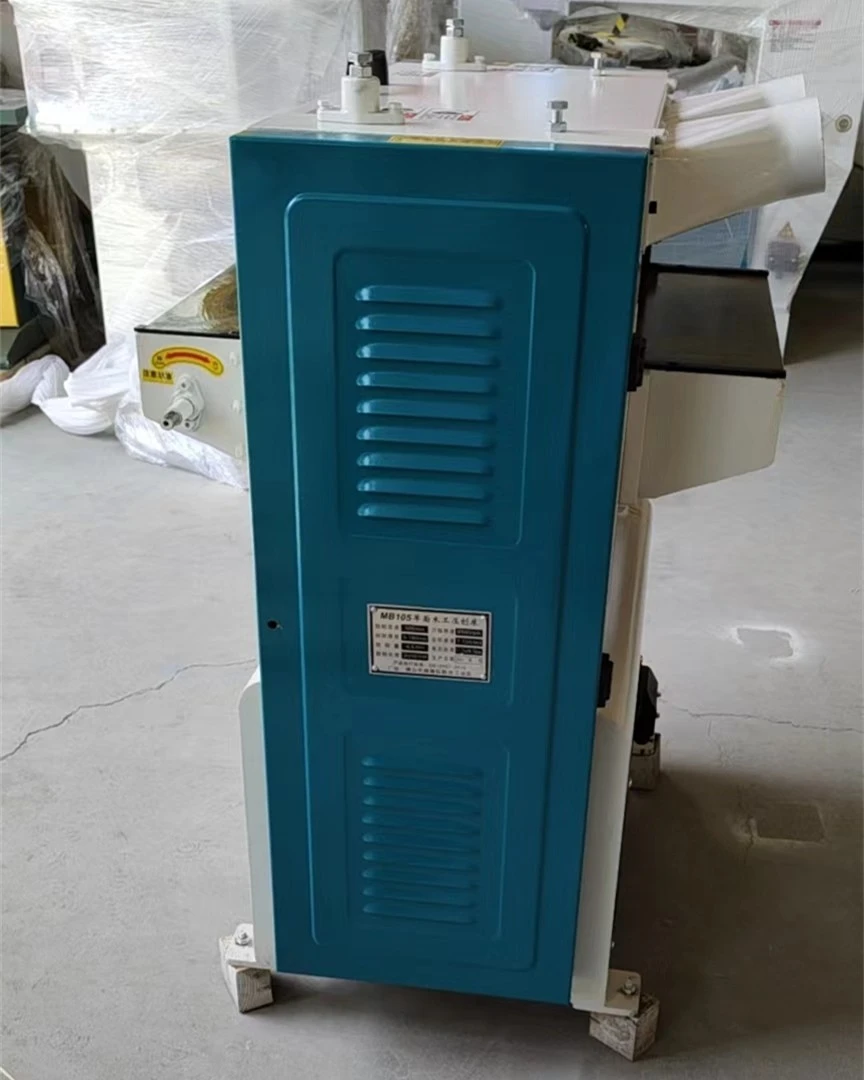
A heavy duty planer thicknesser can be used for pre - processing the wood before it goes through a dedicated molding machine. It can flatten and thickness the boards to the required dimensions, ensuring a more efficient and accurate molding process. For example, you can use a Single Side Wood Thicknesser to prepare the wood pieces before sending them to a spindle moulder.

Conclusion
In conclusion, while a heavy duty planer thicknesser can be used for making some basic moldings, it has its limitations when it comes to creating complex and decorative profiles. Dedicated molding machines are better suited for large - scale production and complex design requirements. However, for small - scale projects and pre - processing, a heavy duty planer thicknesser can be a valuable tool in the woodworking shop.
If you're in the market for a heavy duty planer thicknesser or need advice on the best woodworking equipment for your specific needs, we're here to help. Our team of experts can provide you with detailed information and guidance to ensure you make the right choice. Contact us today to start a discussion about your woodworking requirements and explore the possibilities of our products.
References
- Woodworking Machinery Handbook, 3rd Edition
- Journal of Woodworking Technology, Vol. 25, Issue 3


