

The sanding capacity of a side sanding machine, measured in square meters per hour, is a crucial metric for both manufacturers and users in the woodworking and related industries. As a supplier of side sanding machines, I understand the significance of this parameter in determining the efficiency and productivity of various operations. In this blog post, I will delve into the factors that influence the sanding capacity of a side sanding machine, how to calculate it, and how it compares to other types of sanding equipment.
Factors Affecting Sanding Capacity
Several factors can significantly impact the sanding capacity of a side sanding machine. Understanding these factors is essential for optimizing the performance of the machine and achieving the desired results.
Material Type and Hardness
The type and hardness of the material being sanded play a vital role in determining the sanding capacity. Softer materials, such as pine or cedar, are generally easier to sand and require less time and effort compared to harder materials like oak or maple. The density and grain structure of the wood can also affect the sanding process. For example, woods with a tight, straight grain may sand more smoothly and quickly than those with a curly or irregular grain.
Sanding Belt or Disc Grit
The grit of the sanding belt or disc used in the side sanding machine is another critical factor. Coarser grits, such as 40 or 60, are suitable for removing large amounts of material quickly, while finer grits, such as 120 or 220, are used for finishing and smoothing the surface. Using a coarser grit initially can increase the sanding capacity, but it may also leave a rougher surface that requires additional sanding with finer grits.
Feed Speed
The feed speed of the material through the side sanding machine is directly related to the sanding capacity. A higher feed speed allows more material to be sanded in a given time, increasing the overall square meters per hour. However, increasing the feed speed too much can result in uneven sanding, scratches, or other surface defects. It is essential to find the optimal feed speed for the specific material and sanding requirements.
Machine Power and Performance
The power and performance of the side sanding machine itself are significant factors. A more powerful motor can drive the sanding belt or disc at a higher speed, enabling faster material removal. Additionally, the quality of the machine's construction, including the stability of the frame and the precision of the sanding components, can affect the sanding capacity and the quality of the finished product.
Calculating Sanding Capacity
To calculate the sanding capacity of a side sanding machine in square meters per hour, you need to consider the following formula:
Sanding Capacity (m²/h) = (Width of Sanding Belt or Disc (m) × Feed Speed (m/min) × 60) / Overlap Factor
The overlap factor accounts for the overlapping of the sanding passes and is typically between 1.1 and 1.3, depending on the sanding method and the desired finish.

For example, if a side sanding machine has a sanding belt width of 0.5 meters, a feed speed of 10 meters per minute, and an overlap factor of 1.2, the sanding capacity can be calculated as follows:
Sanding Capacity = (0.5 m × 10 m/min × 60) / 1.2 = 250 m²/h
It is important to note that this is a theoretical calculation, and the actual sanding capacity may vary depending on the factors mentioned above.
Comparing Side Sanding Machines to Other Sanding Equipment
Side sanding machines offer several advantages over other types of sanding equipment in terms of sanding capacity.
Compared to Hand Sanding
Hand sanding is a labor-intensive and time-consuming process, especially for large surfaces. A side sanding machine can sand a much larger area in a shorter period, significantly increasing productivity. For example, a skilled worker may be able to hand sand only a few square meters per hour, while a side sanding machine can achieve tens or even hundreds of square meters per hour.
Compared to Belt Sanders or Orbital Sanders
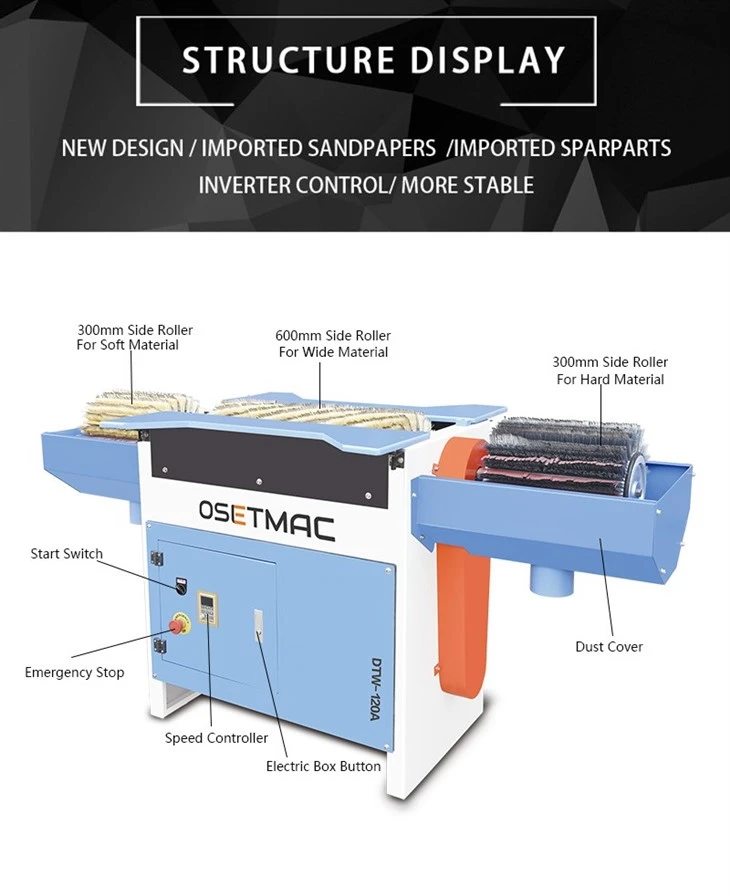
While belt sanders and orbital sanders are commonly used for sanding, side sanding machines are often more suitable for sanding the edges and sides of workpieces. The design of a side sanding machine allows for more precise and consistent sanding of these areas, resulting in a higher-quality finish. Additionally, side sanding machines can handle larger workpieces and have a higher sanding capacity for continuous production.
Horizontal Polishing Machine and Polish Machine
Horizontal polishing machines and polish machines are used for finishing and polishing surfaces to a high gloss. While they may not have the same sanding capacity as side sanding machines in terms of material removal, they are essential for achieving a smooth and shiny finish. Side sanding machines can be used in conjunction with these polishing machines to prepare the surface before polishing, improving the overall efficiency of the process.
Cabinet Door Sanding Machine
Cabinet door sanding machines are specifically designed for sanding cabinet doors and other similar components. They often have features such as adjustable sanding heads and conveyors to ensure precise and consistent sanding. Side sanding machines can complement cabinet door sanding machines by providing additional sanding capacity for the edges and sides of the doors.
Optimizing Sanding Capacity
To optimize the sanding capacity of a side sanding machine, consider the following tips:
- Choose the Right Machine: Select a side sanding machine with sufficient power and performance for your specific sanding requirements. Consider the size of the workpieces, the type of material, and the desired finish.
- Use the Correct Sanding Belt or Disc Grit: Match the grit of the sanding belt or disc to the material and the sanding stage. Start with a coarser grit for material removal and gradually move to finer grits for finishing.
- Adjust the Feed Speed: Experiment with different feed speeds to find the optimal setting for the best sanding results. Monitor the surface quality and adjust the feed speed as needed.
- Maintain the Machine: Regularly clean and maintain the side sanding machine to ensure optimal performance. Replace worn sanding belts or discs, lubricate moving parts, and check the alignment of the sanding components.
Conclusion
The sanding capacity of a side sanding machine, measured in square meters per hour, is influenced by several factors, including material type, sanding belt or disc grit, feed speed, and machine power. By understanding these factors and optimizing the sanding process, you can increase the efficiency and productivity of your woodworking or manufacturing operations. As a supplier of side sanding machines, I am committed to providing high-quality equipment and technical support to help you achieve the best sanding results. If you are interested in learning more about our side sanding machines or have any questions about sanding capacity, please feel free to contact us for a consultation. We look forward to discussing your specific needs and helping you find the right solution for your business.
References
- Woodworking Machinery Handbook, 3rd Edition
- Sanding Techniques and Best Practices, Industry Report


