

In the realm of woodworking and material finishing, the wide belt sanding machine stands as an indispensable tool, renowned for its efficiency and precision in smoothing and refining various surfaces. At the heart of this powerful equipment lies the control panel, a crucial component that plays a multifaceted role in ensuring optimal performance and user convenience. As a leading supplier of wide belt sanding machines, I am delighted to delve into the significance of the control panel and its impact on the overall functionality of these machines.
1. Operational Control and Customization
The primary function of the control panel in a wide belt sanding machine is to provide operators with a centralized interface for controlling and customizing the machine's operations. Through a series of buttons, knobs, and digital displays, operators can easily adjust key parameters such as sanding speed, pressure, and feed rate to suit the specific requirements of the material being processed. For instance, when sanding a delicate piece of veneer, the operator can reduce the sanding speed and pressure to prevent damage to the surface, while increasing the feed rate to ensure efficient processing. On the other hand, when sanding a thicker and more robust material, such as solid wood, the operator can increase the sanding speed and pressure to achieve a smooth and even finish.
The control panel also allows operators to select different sanding modes and functions, such as single-sided sanding, double-sided sanding, and contour sanding. This versatility enables the wide belt sanding machine to handle a wide range of materials and applications, from simple flat surfaces to complex curved shapes. Additionally, some advanced control panels feature programmable settings, which allow operators to save and recall specific sanding parameters for future use. This not only saves time and effort but also ensures consistent and repeatable results, making the wide belt sanding machine an ideal choice for high-volume production environments.
2. Safety and Monitoring
Another important role of the control panel is to ensure the safety of the operator and the machine. The control panel is equipped with a variety of safety features, such as emergency stop buttons, safety interlocks, and overload protection, which help to prevent accidents and damage to the machine. For example, in the event of an emergency, the operator can quickly press the emergency stop button to immediately stop the machine and prevent further damage. The safety interlocks ensure that the machine cannot be operated unless all the safety guards are in place, while the overload protection system automatically shuts down the machine if it detects an excessive load or current.
In addition to safety features, the control panel also provides real-time monitoring of the machine's performance and status. Through digital displays and indicators, operators can easily monitor key parameters such as sanding belt speed, motor temperature, and dust collection efficiency. This allows operators to detect and address any potential issues or problems before they escalate, ensuring the smooth and reliable operation of the machine. For example, if the sanding belt speed drops below the set value, the operator can immediately check for any blockages or issues with the belt drive system and take appropriate action to resolve the problem.
3. Maintenance and Troubleshooting
The control panel also plays a crucial role in the maintenance and troubleshooting of the wide belt sanding machine. Through diagnostic functions and error codes, the control panel can provide operators with detailed information about the machine's status and any potential issues or problems. This allows operators to quickly identify and diagnose the root cause of the problem and take appropriate action to resolve it. For example, if the control panel displays an error code indicating a problem with the sanding belt tension, the operator can refer to the machine's manual or contact the manufacturer's technical support team for assistance in adjusting the tension.
In addition to diagnostic functions, the control panel also provides access to maintenance information and schedules. Through digital displays and indicators, operators can easily view the recommended maintenance procedures and intervals for the machine's various components, such as the sanding belts, motors, and bearings. This allows operators to plan and schedule maintenance activities in advance, ensuring that the machine is always in optimal condition and minimizing downtime. For example, if the control panel indicates that the sanding belts need to be replaced, the operator can order the replacement belts in advance and schedule the maintenance activity during a convenient time.
4. Integration and Connectivity
In today's digital age, the control panel of a wide belt sanding machine is not just a standalone device but also a key component of a larger automation and control system. Many modern wide belt sanding machines are equipped with advanced control panels that support integration and connectivity with other equipment and systems, such as material handling systems, dust collection systems, and quality control systems. This allows for seamless communication and coordination between different components of the production process, improving efficiency, productivity, and quality.
For example, through integration with a material handling system, the wide belt sanding machine can automatically receive and process workpieces, eliminating the need for manual loading and unloading. This not only saves time and labor but also reduces the risk of errors and accidents. Similarly, through integration with a dust collection system, the wide belt sanding machine can automatically adjust the dust collection settings based on the type and volume of dust generated, ensuring efficient and effective dust collection. Additionally, through integration with a quality control system, the wide belt sanding machine can automatically measure and monitor the surface quality of the workpieces, providing real-time feedback and alerts to the operator if any quality issues are detected.
Conclusion
In conclusion, the control panel plays a vital role in the operation, safety, maintenance, and integration of a wide belt sanding machine. As a leading supplier of wide belt sanding machines, we understand the importance of providing our customers with high-quality control panels that are easy to use, reliable, and feature-rich. Our wide range of R - RP1000 Sanding Machine, Sanding Machine For Wood, and Plywood Sanding Machine are equipped with state-of-the-art control panels that offer advanced features and functionality to meet the diverse needs of our customers.

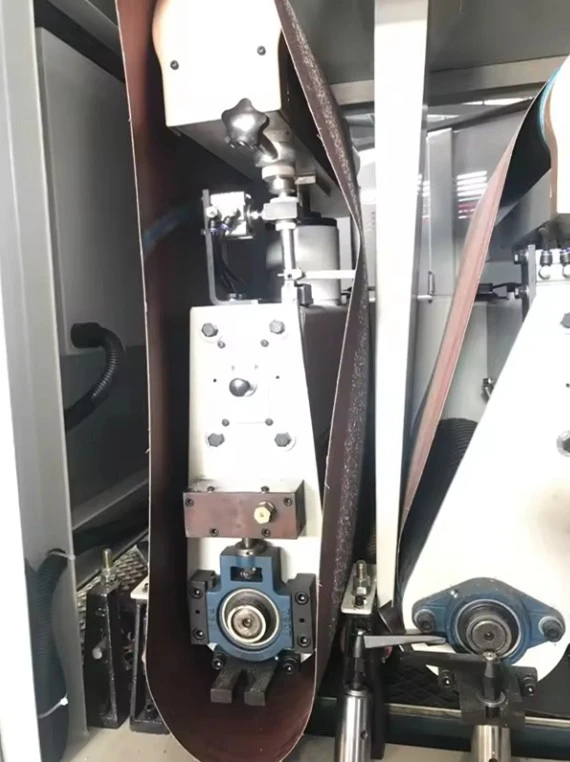
If you are in the market for a wide belt sanding machine or have any questions about our products, we encourage you to contact us to discuss your specific requirements. Our team of experienced sales and technical support professionals is ready to assist you in selecting the right machine for your application and providing you with the highest level of service and support.
References
- Woodworking Machinery Handbook, 3rd Edition, by John S. Hoadley
- Industrial Sanding Technology: Principles and Applications, by David A. Stephenson
- Safety Standards for Woodworking Machinery, published by the International Organization for Standardization (ISO)


