

Hey there! As a blade supplier, I've seen firsthand how crucial fan blade design is when it comes to air flow. In this blog, I'm gonna break down the impact of different fan blade designs on air movement, and why it matters for various applications.
Let's start with the basics. Fan blades are essentially the heart of any fan system. They're responsible for converting mechanical energy into the kinetic energy of moving air. The way these blades are designed can significantly affect how well they do this job.
Blade Shape and Air Flow
One of the most important factors in fan blade design is the shape of the blade. There are several common shapes, each with its own unique impact on air flow.
Curved Blades
Curved blades are probably the most common type you'll see in fans. They're designed to scoop up air and push it forward in a smooth, continuous motion. This curvature allows the blades to generate a higher volume of air flow compared to flat blades. The reason behind this is that the curved shape creates a pressure difference between the front and back of the blade. As the blade rotates, air is drawn in on the low - pressure side and pushed out on the high - pressure side, resulting in a more efficient transfer of air.
For example, in a household ceiling fan, curved blades can circulate air more effectively throughout the room. They create a gentle, widespread breeze that helps to cool the space and improve comfort.
Flat Blades
Flat blades, on the other hand, are simpler in design. They're often used in smaller fans or in applications where space is limited. While they can still move air, they're generally not as efficient as curved blades. Flat blades rely mainly on the force of their rotation to push air forward. They don't create the same kind of pressure difference as curved blades, so the air flow they generate is more direct but less voluminous.
In some industrial settings, flat blades might be used in exhaust fans where the goal is to quickly remove air from a specific area. However, for larger - scale air circulation, curved blades are usually the better choice.
Airfoil Blades
Airfoil blades are a more advanced design that mimics the shape of an airplane wing. These blades are highly efficient at moving air because they're designed to minimize drag and maximize lift. The shape of an airfoil blade causes air to flow faster over the top surface than the bottom surface, creating a pressure difference that generates lift. In the context of a fan, this lift translates into a powerful and efficient air flow.
Airfoil blades are commonly used in high - performance fans, such as those found in HVAC systems or in computer cooling fans. They can move large volumes of air with relatively low energy consumption, making them a cost - effective and environmentally friendly option.
Blade Angle and Air Flow
Another key aspect of fan blade design is the blade angle. The angle at which the blades are set relative to the plane of rotation can have a big impact on the direction and volume of air flow.
Low - Angle Blades
Blades with a low angle (less than 30 degrees) are typically used when a gentle, wide - spread air flow is desired. These blades move air in a more horizontal direction, creating a broad, diffuse breeze. They're often found in fans used for personal comfort, like desk fans or pedestal fans.
The advantage of low - angle blades is that they can cover a large area with a relatively even air flow. However, they may not be as effective at moving air over long distances or in high - resistance environments.
High - Angle Blades
High - angle blades (greater than 45 degrees) are designed to move air in a more vertical direction. They generate a more concentrated, powerful air flow that can travel longer distances. High - angle blades are commonly used in industrial fans, such as those used for ventilation in large warehouses or factories.
These blades are better suited for applications where a strong, focused air flow is needed to overcome obstacles or to move air through ductwork. However, they may create a more intense and less comfortable breeze in a residential setting.
Blade Number and Air Flow
The number of blades on a fan also plays a role in air flow. Generally, fans with more blades can move more air, but they may also require more power to operate.
Two - Blade Fans
Two - blade fans are simple and lightweight. They're often used in small, portable fans or in applications where cost is a major factor. While they can move air, they tend to create a more choppy and less consistent air flow compared to fans with more blades.
Three - Blade Fans
Three - blade fans are a popular choice for many household fans. They offer a good balance between air flow efficiency and energy consumption. The three - blade design creates a relatively smooth and consistent air flow that is suitable for most residential applications.
Four - Blade and More
Fans with four or more blades can generate a very powerful and uniform air flow. They're often used in larger fans or in applications where a high volume of air needs to be moved. However, as the number of blades increases, so does the drag on the motor, which can lead to higher energy consumption.
Real - World Applications
Now that we've covered the basics of fan blade design and air flow, let's take a look at some real - world applications and how the right blade design can make a difference.

Residential Cooling
In a home, the right fan blade design can greatly enhance comfort and energy efficiency. For example, a ceiling fan with curved, low - angle blades can create a gentle, widespread breeze that helps to cool the room without using a lot of energy. This can reduce the need for air conditioning, which can save you money on your energy bills.
Industrial Ventilation
In an industrial setting, proper ventilation is crucial for maintaining a safe and healthy work environment. Industrial fans with high - angle, airfoil blades are often used to move large volumes of air through ductwork and to remove contaminants from the air. These fans need to be powerful and efficient to ensure that the air quality in the workplace meets safety standards.
Automotive Cooling
In cars, fans are used to cool the engine and the radiator. The fan blade design in automotive applications needs to be optimized for high - speed operation and efficient air flow. Airfoil blades are commonly used in automotive fans because they can move a large amount of air quickly while minimizing energy consumption.
Conclusion
As you can see, fan blade design has a significant impact on air flow. The shape, angle, and number of blades all play a role in determining how effectively a fan can move air. Whether you're looking for a fan for your home, an industrial facility, or an automotive application, choosing the right blade design is essential for achieving the desired air flow and performance.
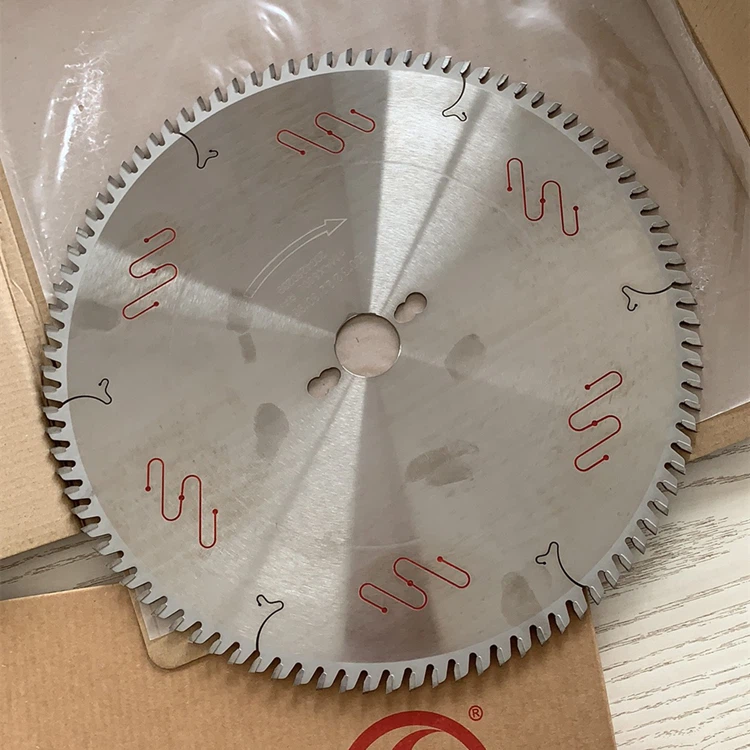
If you're in the market for high - quality blades, we're here to help. We're a leading blade supplier with a wide range of products to meet your needs. Check out our Sliding Table Saw Blade for woodworking applications. And if you have any questions or need help selecting the right blade for your project, don't hesitate to reach out. We're always happy to assist with your procurement and have a detailed discussion about your specific requirements.
References
- "Fluid Mechanics" by Frank M. White
- "Fan Engineering: The Application of Air Moving Equipment" by Buffalo Forge Company


