

Hey there, woodworking enthusiasts! I'm a supplier of wood surface planer jointers, and today we're gonna dig into a hot topic: Can a wood surface planer jointer be used for making wooden boards of different thicknesses? Let's get right into it.
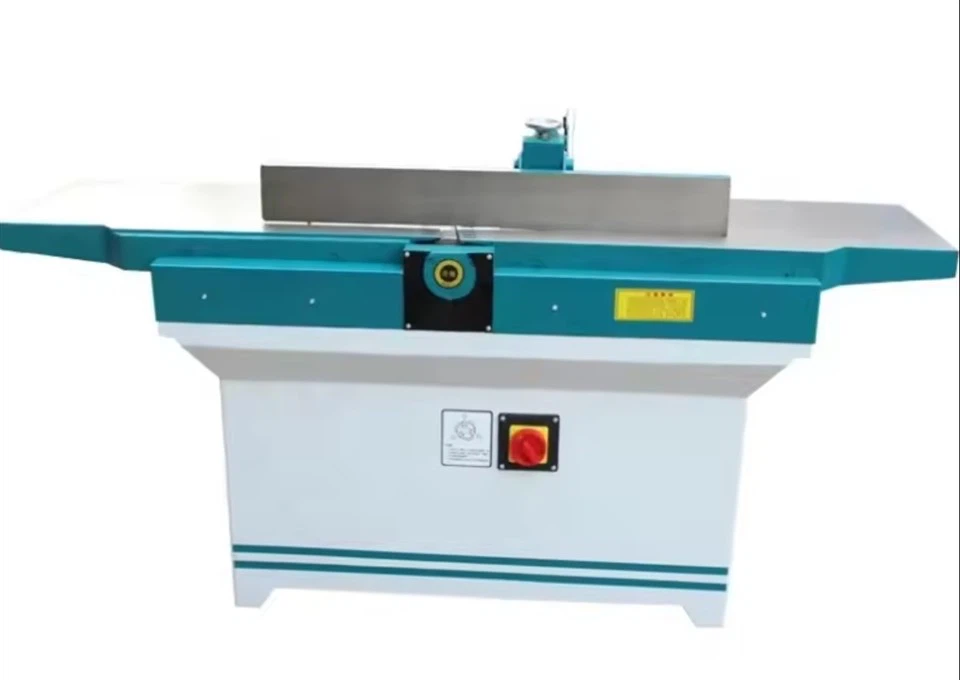
First off, let's understand what a wood surface planer jointer is. It's a pretty nifty tool in the woodworking world. This machine is designed to flatten and smooth the surfaces of wooden boards, as well as to make their edges straight and square. But can it handle boards of various thicknesses? The short answer is yes, and here's how.
Most modern wood surface planer jointers come with adjustable features. They've got a height adjustment mechanism that allows you to set the cutting depth. This means you can easily change the thickness of the wood that the machine will remove with each pass. For instance, if you're working on a thick board and you want to reduce its thickness gradually, you can start with a small cutting depth. Then, as you make multiple passes over the board, you can incrementally increase the cutting depth until you reach the desired thickness.
Let's say you've got a board that's 2 inches thick, but you need it to be 1.5 inches thick. You can set the planer jointer to remove, say, 0.1 inches with each pass. After making a few passes, you'll get closer and closer to that 1.5 - inch mark. It's all about taking your time and making those precise adjustments.
Now, there are some factors to keep in mind when using a wood surface planer jointer for different thicknesses. One of the most important things is the quality of the wood. If the wood has knots, cracks, or other imperfections, it can affect the performance of the machine. Knots, in particular, can be a real pain. They're harder than the surrounding wood, so when the planer jointer hits a knot, it can cause the cutter to bounce or even chip. This can result in an uneven surface on the board.
Another factor is the feed rate. You need to make sure you're feeding the wood through the machine at the right speed. If you feed it too fast, the planer jointer might not be able to cut the wood properly, and you'll end up with a rough surface. On the other hand, if you feed it too slowly, it can put unnecessary stress on the machine and waste your time.
When it comes to the types of wood, different woods have different densities and hardness levels. Softwoods like pine are generally easier to plane than hardwoods like oak. So, you might need to adjust the settings of your planer jointer depending on the type of wood you're working with. For softer woods, you can usually use a slightly higher feed rate and a larger cutting depth. But for hardwoods, you'll want to be more cautious and use a lower feed rate and a smaller cutting depth.

Now, let's talk about the benefits of using a wood surface planer jointer for making boards of different thicknesses. One of the biggest advantages is the precision it offers. You can achieve a very accurate thickness, which is crucial if you're working on a project that requires precise measurements. For example, if you're building a cabinet, you need the boards to be of uniform thickness so that they fit together properly.
Another benefit is the time - saving aspect. Instead of using manual tools like hand planes to reduce the thickness of the boards, which can be a very time - consuming process, a planer jointer can do the job much faster. It can also produce a smoother finish than manual tools, which means you'll spend less time sanding the boards later on.
As a supplier, I've seen firsthand the versatility of wood surface planer jointers. They're not just for making boards of the same thickness. They can handle a wide range of projects, from small DIY projects to large - scale furniture manufacturing.
Now, if you're in the market for a wood surface planer jointer, we've got some great options. For example, our MB505 3KW woodworking planer is a popular choice. It's got a powerful motor and precise adjustment features, which make it perfect for working with boards of different thicknesses.
We also offer the Planer Woodworking Machine, which is another great option. It's designed for high - volume production, but it's also very user - friendly and can handle a variety of wood thicknesses.
And if you're looking for something a bit different, our Wood Spindle Moulder Machine can also be used in combination with a planer jointer for more complex woodworking projects.
If you're interested in any of our products, or if you have any questions about using a wood surface planer jointer for making boards of different thicknesses, don't hesitate to get in touch. We're here to help you make the right choice for your woodworking needs. Whether you're a professional woodworker or just starting out, we've got the tools and the expertise to support you.
In conclusion, a wood surface planer jointer is definitely a versatile tool that can be used for making wooden boards of different thicknesses. With the right adjustments and a bit of know - how, you can achieve great results. So, if you're looking to take your woodworking projects to the next level, consider investing in a quality planer jointer.
References:
- Woodworking Machinery Handbook
- Guide to Modern Woodworking Tools


