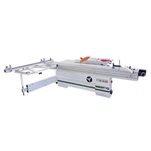
Key Developments Reshaping the Industry:
AI-Optimized Wood Processing Leading companies such as Homag and Biesse introduced CNC routers equipped with real-time adaptive control systems. These machines use vision sensors and deep learning algorithms to detect wood grain patterns, minor defects, and density variations-automatically adjusting cutting speed, toolpath, and blade type to maximize material yield and minimize waste. Early adopters report a 15-20% increase in material efficiency,
Compact and Connected Machinery for Artisan Workshops A new generation of compact, modular CNC machining centers-such as SCM's Maestro Connect and Powermatic's Smart Series-now offer cloud-based operation and remote diagnostics. Aimed at small-batch producers and custom furniture makers, these systems allow operators to monitor production, perform maintenance alerts, and download updated cutting programs via smartphone. This connectivity significantly lowers the barrier to automation for smaller workshops in Europe and North America.
Energy Recovery and Sustainable Design Under the theme "Green Manufacturing," exhibitors highlighted machinery that incorporates energy-recycling systems. For example, Weinig's Powair 423 planer now uses brake energy recovery technology to feed power back into the machine, reducing net energy consumption by up to 25%. In addition, dust extraction systems have been improved to convert wood waste into biomass pellets or 3D printing filament,
On-Demand Customization with Hybrid Workflows Several manufacturers demonstrated integrated production lines that combine traditional craftsmanship with robotic assistance. For instance, FlexiCell by IMA Schelling uses collaborative robots ("cobots") to assist human operators in handling, sanding, and finishing tasks. This allows factories to produce highly personalized furniture-such as bespoke kitchens or acoustic wood panels-without sacrificing scale or speed.
Smart Home-ready Woodworking As demand grows for tech-enabled furniture, woodworking machines now come pre-programmed with tooling options for embedding wireless chargers, LED lighting, and touch-sensitive surfaces directly into wood products. Anderson Group introduced a five-axis CNC model specifically designed to mill integrated tech compartments in desks, shelves, and cabinetry.
Industry Outlook:
According to a market analysis report released during WMF 2025, the woodworking machinery sector is projected to grow at a CAGR of 4.8% through 2030, with smart and sustainable equipment driving most of this expansion. "The future lies in adaptable, data-enhanced, and eco-conscious manufacturing," said Dr. Lisa Wang, a industry analyst at Farmonaut. "Whether for mass production or micro-studios, technology is making woodworking more precise, more profitable, and more planet-friendly."
From AI-driven optimization to eco-efficient dust management, innovation in woodworking machinery is enabling manufacturers to align high-value output with sustainable practices. These technologies not only enhance global competitiveness but also support the industry's contribution to a circular economy.